
Article
Kraft vs. Cardboard vs. Corrugated: Which Recyclable Stock Fits Your Product?
7 min read · 2 views
Every stock we run eco kraft, cardboard, corrugated recycles. That's not the decision. The decision is which one holds your product's weight, survives your shipping route, and still looks right on a shelf or in a doorstep photo. Get the stock wrong and you'll find out at the worst point: a crushed corner in a customer's unboxing video, or a $4,000 rigid-box quote for a product that never needed it.
This is the breakdown we actually walk customers through on a quote call, not a general "eco packaging" explainer. If you already know your product's weight and where it's going, you can match it to a stock in the table below and skip straight to your category.
The quick answer
KraftCardboard (folding carton)CorrugatedTypical weight8pt–18pt paperboard, often unbleached12pt–24pt SBS paperboardFluted board, measured in flute size (E, B, C) not point weightBest forLight retail items, food-safe contact, visible "eco" brandingRetail boxes needing crisp print and structureShipping, bulk, anything that stacks or travels farPrint qualityGood, slightly muted on uncoated stockBest — coated surface holds fine detail and colorGood on the outer liner, not ideal for fine detailCrush resistanceLow–moderateModerateHighTypical use on our floorSoap, candles, coffee, bakery, kraft mailersCosmetics, retail boxes, gift boxes, tuck-end cartonsE-commerce shippers, bulk food, wholesale cartonsCost per unit at 500 pcsLowestMidMid–high (depends on flute and size)RecyclableYesYesYes
What "Recyclable" actually means for these three
All three are paper-based and go in standard curbside recycling once any plastic window, foil, or lamination is removed or is itself a recyclable-compatible material which is why we default to plastic-free windows and soy-based inks across the board. The stock choice below doesn't change whether something is recyclable. It changes whether it survives being recycled after it does its job: protecting your product from your warehouse to someone's front step.
Kraft: Light Protection, Visible Sustainability
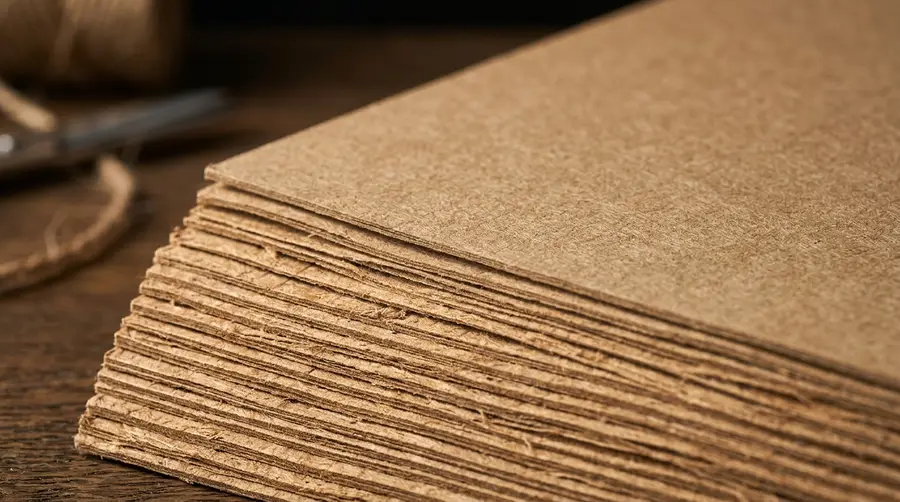
Kraft is unbleached or lightly processed paperboard the visible fiber texture is the point, not a defect. It signals "eco" before a customer reads a single word on the box, which is exactly why it's the default for candle boxes,soap boxes,coffee packaging, and bakery boxes where the packaging itself is part of the brand story. Browse the full range on our eco kraft boxes category, or see the stock on its own at eco kraft stock.
Where Kraft Works:
- Products under roughly 1 lb that aren't fragile
- Anything where you want the natural fiber look visible, not printed over
- Retail items that won't be freight-shipped stacked and loaded
Where Kraft Struggles:
- Heavier products (rigid bottles, ceramics, glass jars over 8–10 oz) — it will hold, but corners take damage in transit without added protection like inserts
- Print jobs needing bright, saturated color across the full surface — ink sits differently on uncoated kraft than it does on coated white stock, so brand colors read slightly warmer/muted
We run kraft at 8pt–18pt depending on the product. Lighter weights (8pt–12pt) suit soap and small cosmetics; the upper range (14pt–18pt) is what we use for bakery and retail cartons that need to hold shape without collapsing. Not sure which weight your product needs? Our how to measure a box guide covers sizing before you request a quote.
Cardboard (folding carton / SBS): the Retail Workhorse
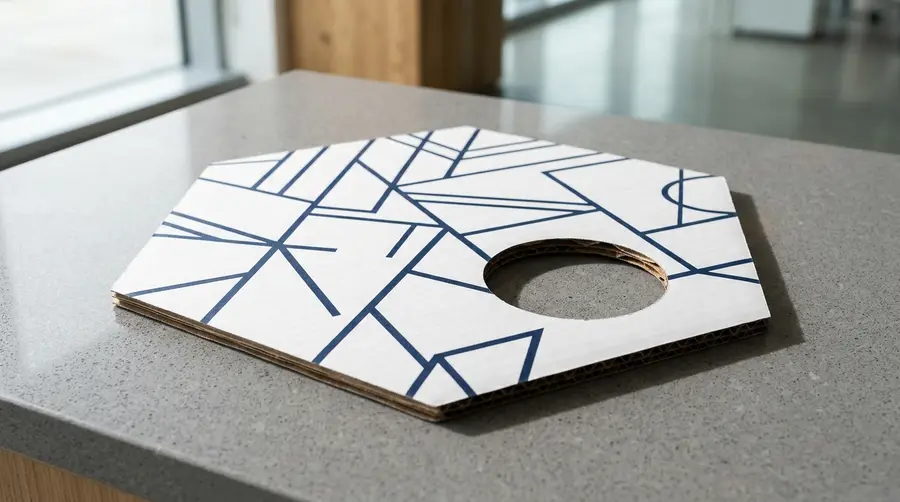
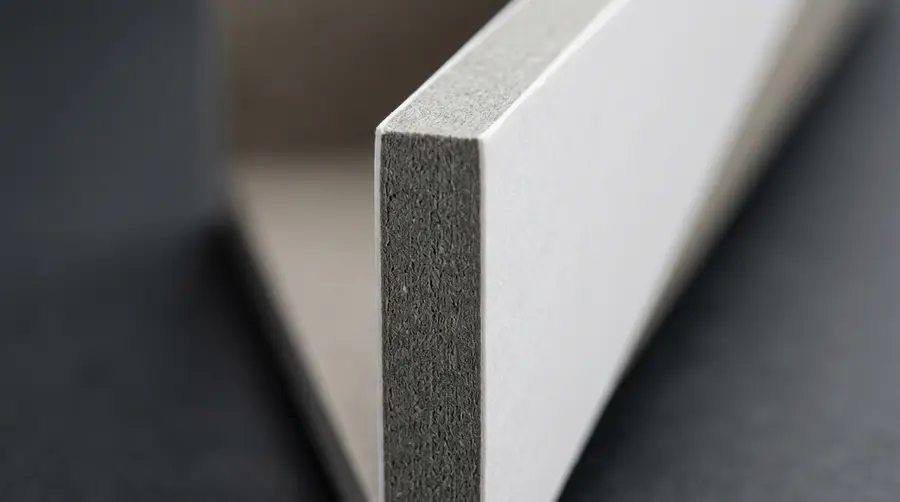
When people say "cardboard box" for a retail product, they usually mean folding carton SBS (solid bleached sulfate) paperboard, the coated white stock behind most cosmetic boxes, cereal cartons, and gift boxes. It's not the same material as a corrugated shipping box, and mixing the two up is the most common sizing mistake we see on new quotes. See the full range under cardboard boxes.
Where Cardboard Works:
- Cosmetics, retail packaging, gift boxes anything where print fidelity matters more than crush resistance
- Products that will sit on a shelf or in a mailer, not get palletized and freight-shipped loose
- Foiling, spot UV, embossing cardboard's coated surface takes finishing work cleanly; kraft and corrugated don't (see our premium finishes options)
Where Cardboard Struggles:
- Heavy or dense products without internal support cardboard alone won't protect glass or ceramics in freight; you'd add foam or a corrugated shipper around it
- Long-haul shipping without a secondary shipping carton
We run cardboard from 12pt (light cosmetics) up to 24pt for retail cartons that need to stand up to shelf handling. Above that, most customers move to rigid boxes (28pt+) rather than heavier cardboard, since rigid holds a crisper edge at that weight.
Corrugated: built to Survive the Journey
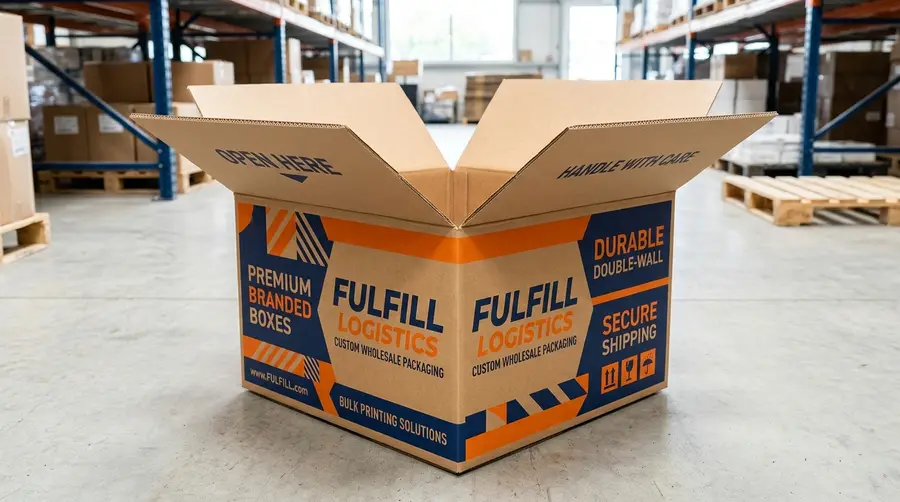
Corrugated is the fluted board of two flat liners with a wavy fluted layer glued between them that gives it the crush resistance kraft and cardboard don't have. It's rated by flute size rather than point weight: E-flute is thin and used for small retail/mailer applications where you still want some cushioning; B-flute and C-flute are thicker, used for bulk shipping and heavier product runs. Browse the range at corrugated boxes, or start from the shape at mailer boxes if you're shipping direct to consumer.
Where Corrugated Works:
- Anything shipped direct to consumer, palletized, or freight-loaded
- Heavier products (bottles, jars, multi-item bundles, electronics)
- Bulk and wholesale cartons where the box itself takes handling damage so your product doesn't
Where Corrugated Struggles:
- Fine print detail the outer liner prints well but not at the resolution cardboard achieves, so it's the wrong choice if the box itself is the primary brand surface a customer photographs unboxing
- Small, delicate retail items where the flute adds unnecessary bulk and cost
Matching Stock to what you're Actually Packing
- Soap, candles, bath products → kraft, sometimes with a cardboard insert card for print detail — see soap boxes and candle boxes
- Cosmetics, perfume, skincare → cardboard (folding carton) for the shelf-facing box; add a corrugated shipper if you're mailing direct to customers — see cosmetic boxes
- Coffee, bakery, food service → kraft for retail-facing bags/boxes; food-contact-safe stock if the product touches the packaging directly — see coffee packaging,bakery boxes, and food boxes
- Jewelry, small gift items → cardboard with insert (foam, velvet, or slot) for the retail box — see jewelry boxes and gift boxes
- E-commerce shipping, wholesale, bulk orders → corrugated, sized to minimize empty airspace (which is both a cost and a damage-in-transit issue) — see corrugated boxes
- Products doing both — retail-quality box that also ships alone → cardboard or rigid outer with a corrugated mailer variant, which is why we build a lot of two-piece setups: a nice inner box, a plain corrugated shipper around it — see tray & sleeve boxes
If your product doesn't fit cleanly into one of these, that's normal — a lot of quotes end up as a hybrid (cardboard box, corrugated shipper) rather than one stock doing both jobs. Not sure where yours lands? Browse all packaging types or send us the product and we'll tell you on the quote call.
Frequently Asked Questions
Can I get the same box in more than one stock to test?
Yes we build a free 3D mockup with every quote, and physical samples can be arranged before you commit to a production run. It's worth testing kraft vs. cardboard side by side if your product sits on the edge between the two.
Is corrugated always the "eco-friendliest" choice since it's the sturdiest?
Not necessarily sturdiest doesn't mean most sustainable. All three stocks we run are recyclable; the more sustainable choice is whichever one is right-sized for your product, since oversized boxes waste material and increase shipping emissions regardless of stock type.
Does switching from cardboard to kraft change my minimum order quantity?
No — our MOQ is 50 units regardless of stock, since we print digitally at low volumes with no die or plate charges.
Can I mix stocks kraft box with a cardboard insert, for example?
Yes, this is common for soap, jewelry, and gift packaging. Tell your packaging specialist what you're combining and it gets built into the same quote. Once you've settled on a stock, check our artwork guidelines before sending files so the first proof comes back right.
Have a product in hand and not sure which of these fits? Get a free quote — tell us the size and weight, and we'll recommend a stock before you pay for anything. Or browse the full box catalog to see every style each stock comes in.
Boxes from this article
Every one printed to your exact size, from 250 boxes, with a free dieline.
Price this packaging
Send your dimensions and a quantity and a specialist replies within 24 hours with a fixed price and a free 3D mockup. Nothing is charged until you approve it.
- Free dieline and 3D mockup before you pay
- No die charges, no plate charges
- Orders from 250 boxes, free US & Canada shipping
- Artwork in AI, PDF, EPS or TIFF
Keep reading
A Comprehensive Guide to Custom Packaging Products for Every Industry
Packaging is more than just a protective layer; it’s a marketing tool that creates lasting impressions, communicates brand values, and enhances customer
4 min readRead →
Aesthetic Packaging Solutions in TX | Guide
Aesthetic packaging solutions in TX are transforming how businesses present their products and connect with consumers. By combining creativity,
3 min readRead →
Best Mylar Bag Designs That Increase Sales in 2026
Discover designer mylar bags that boost sales. Learn trends, custom packaging tips, and how smell proof, branded mylar bags grow your business.
5 min readRead →